Enchanting Alice in Wonderland Watercolour Clipart for Creatives
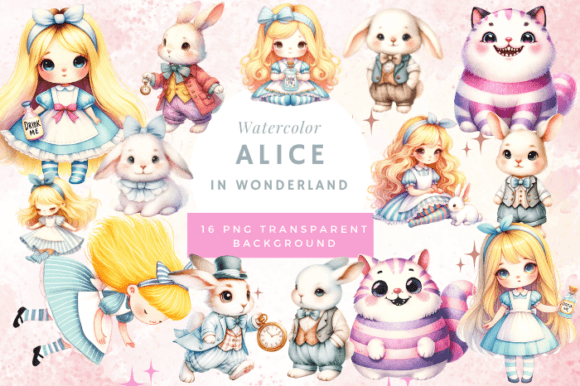
There's a distinct magic that happens when classic storytelling meets modern design tools. As someone who works with brands and creatives daily, I see a constant search for assets that are not just beautiful, but also carry emotional weight and versatility. The Alice in Wonderland Watercolour Clipart collection is a prime example of this. It’s more than a set of pretty pictures; it’s a narrative toolkit rendered in soft, ethereal watercolors. Each piece, from the iconic pocket watch to the whimsical playing cards, captures a sense of nostalgia and fantasy that resonates deeply with audiences. The transparent backgrounds and high-resolution PNG files make them immediately functional, but their true value lies in their ability to inject a story into any project.
The Visual Language of Whimsy: Style and Appeal
What sets this clipart bundle apart is its authentic watercolor aesthetic. The textures are soft, with visible brushstrokes and delicate color bleeds that digital filters often struggle to replicate convincingly. This handcrafted quality lends an organic, artisanal feel to any design. The color palette leans into pastels and muted tones, which offers incredible flexibility. It can feel vintage and romantic, or modern and minimalist depending on the context. This isn’t a loud, cartoonish style; it’s sophisticated illustration with a personality that appeals to adults. For a designer, this means the assets work harmoniously with a wide range of typography choices. They pair beautifully with elegant serif fonts for a classic editorial look, or with a clean sans serif font to create a fresh, contemporary contrast. The collection’s strength is its ability to be the focal point or a subtle accent, making it a valuable asset for brand identity work that requires a touch of wonder.
Practical Applications: From Branding to Personal Projects
The utility of high-quality design assets is measured by their adaptability. This Alice in Wonderland Watercolour Clipart set excels across a spectrum of applications. For entrepreneurs and small business owners, it’s a goldmine. Imagine a bakery using the Mad Hatter for a tea party promotion, or a boutique stationer building an entire packaging design around the whimsical motifs. The files are perfect for sublimation prints on mugs, tote bags, and apparel, allowing for the creation of unique product lines with minimal overhead. Marketers and content creators can leverage these illustrations for social media graphics that stop the scroll. A blog post about creativity or a newsletter about imagination gains instant visual appeal with a relevant, story-driven image. For publishers, these elements can enhance book covers, interior chapter illustrations, or marketing materials, providing a cohesive visual language that readers will recognize and associate with a specific genre or tone.
For personal projects, the value is equally tangible. Scrapbooking enthusiasts can document memories with a layer of fantasy. DIY crafters can create one-of-a-kind greeting cards, party invitations, or wall art that feels genuinely special. The high resolution (up to 5000px) ensures crisp results even for large-format printing like home decor pieces. This versatility is key. It’s not a single-use asset; it’s a library of possibilities. When selecting these for a commercial project, always review the licensing. For personal use, the scope is wide open. For commercial applications, understanding the terms ensures you can build your products with confidence, integrating this creative font of visual storytelling into your business model without concern.
Integrating the Magic: A Designer’s Perspective
Successfully incorporating such a distinctive style requires a thoughtful approach. The first rule is to let the art breathe. These illustrations have a strong personality, so avoid cluttering the design. Use them as a central hero image or as a repeating pattern with ample white space. This is where visual hierarchy comes into play. Pair a detailed clipart piece with a simple font pairing—perhaps a script font for a headline and a sans serif font for body text—to ensure readability and balance. The whimsy of the art should inform, not overwhelm, the message.
Consider the medium. For digital projects like web design or social media graphics, the transparent PNGs layer seamlessly over photos or colored backgrounds. For print, like editorial design or packaging design, pay attention to color profiles to ensure the watercolor hues reproduce accurately. A practical tip is to create a mood board before you start. Pin the clipart alongside your chosen fonts, color swatches, and competitor examples. This helps you evaluate the overall fit and ensures the final product feels cohesive. Does the soft, nostalgic feel of the clipart align with your brand’s voice? For a children’s book author, it’s a natural fit. For a tech startup, it might be used sparingly as a metaphor for innovation and thinking outside the box. The key is intentionality. Used with purpose, these assets do more than decorate; they communicate a specific emotion and story, elevating your project from ordinary to memorable.